


- by StokeVoltaics
Powering Your Camp Kitchen: How Much Energy the Nomad Cooking System Uses
- by StokeVoltaics
When you’re out camping, RVing, or just hanging in your backyard under the palms, every watt matters. With the Nomad Cooking System you’ve got an electric cooking kit that plays nice with portable power stations — so you can ditch the propane canisters and still get a hot meal. Let’s dive into what the energy usage actually looks like, what our boil-test revealed, and what that means when you want to cook beyond just boiling water.
No open flames, no fuel canisters — perfect for eco-minded and fire-safe outdoor cooking.
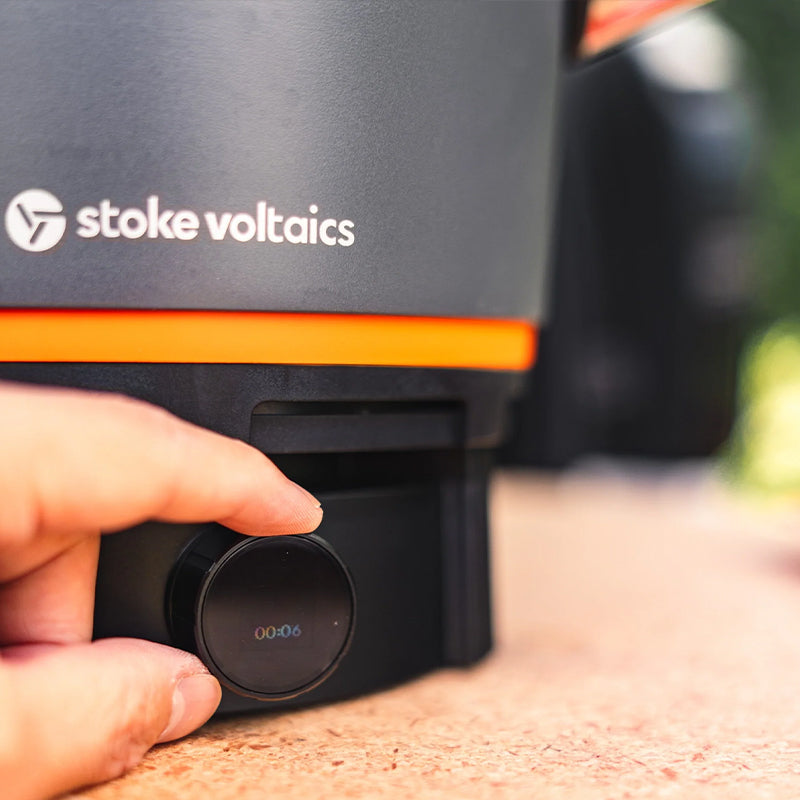
Adjustable power range
200W to 1000W (in increments) so you can match your setup.
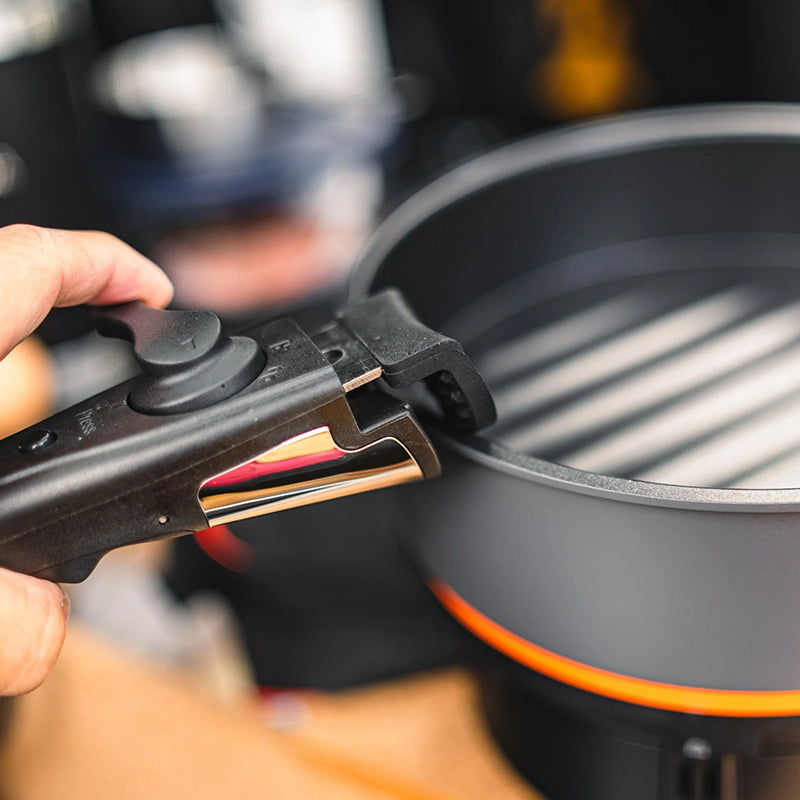
Modular design
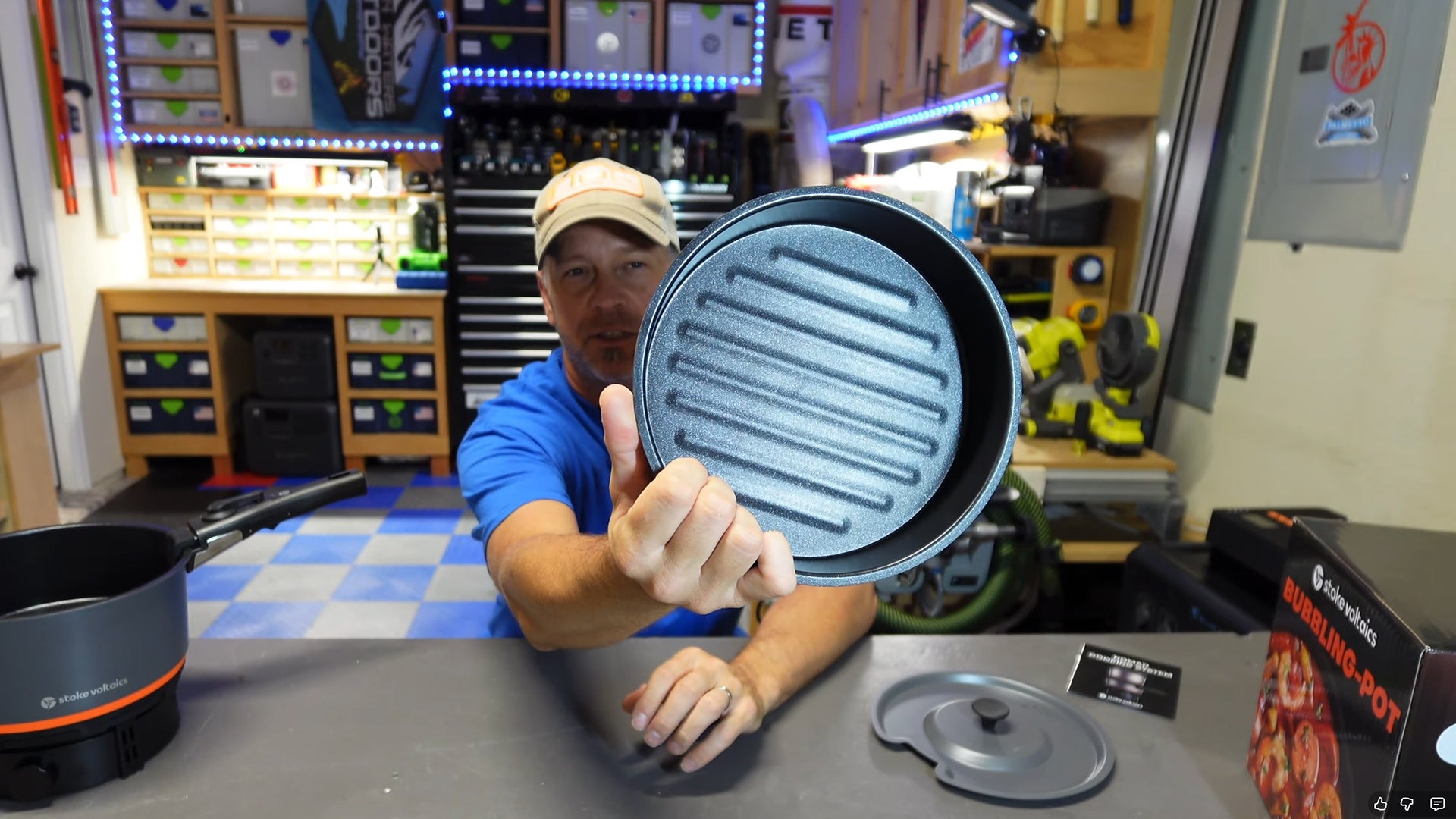
cooking reactor base + sizzling pan + bubbling pot + detachable handle.
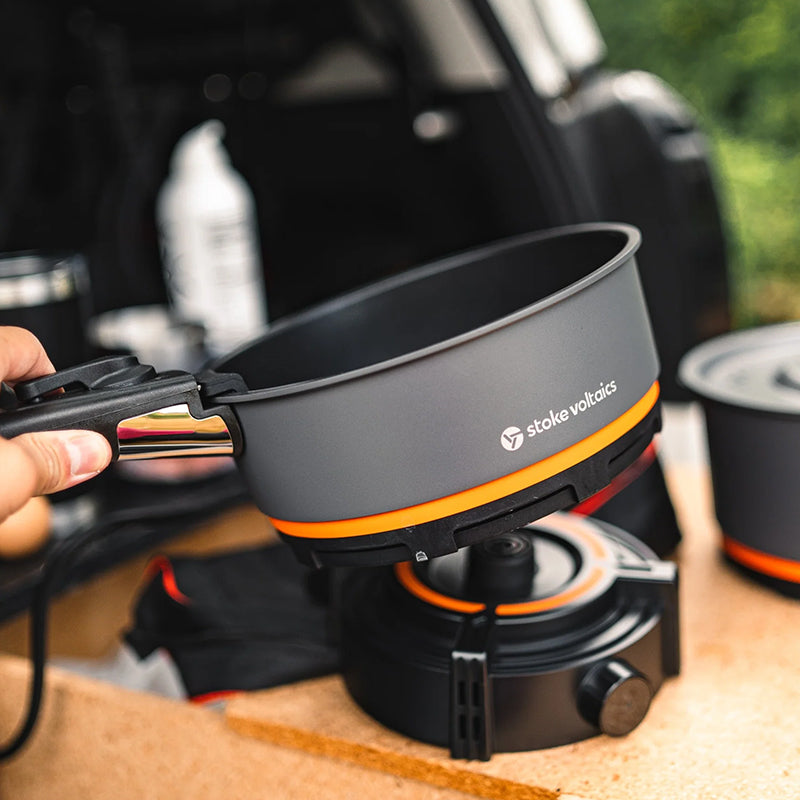
Smart safety & efficiency features
auto-pause when the pot/pan is lifted, automatic shut-off after idle time.
We kicked things off with a simple test: boiling water. According to one review the system brought ~34 oz (about 1 liter) of water to boil using the highest 1000W setting — and did so “surprisingly fast”.
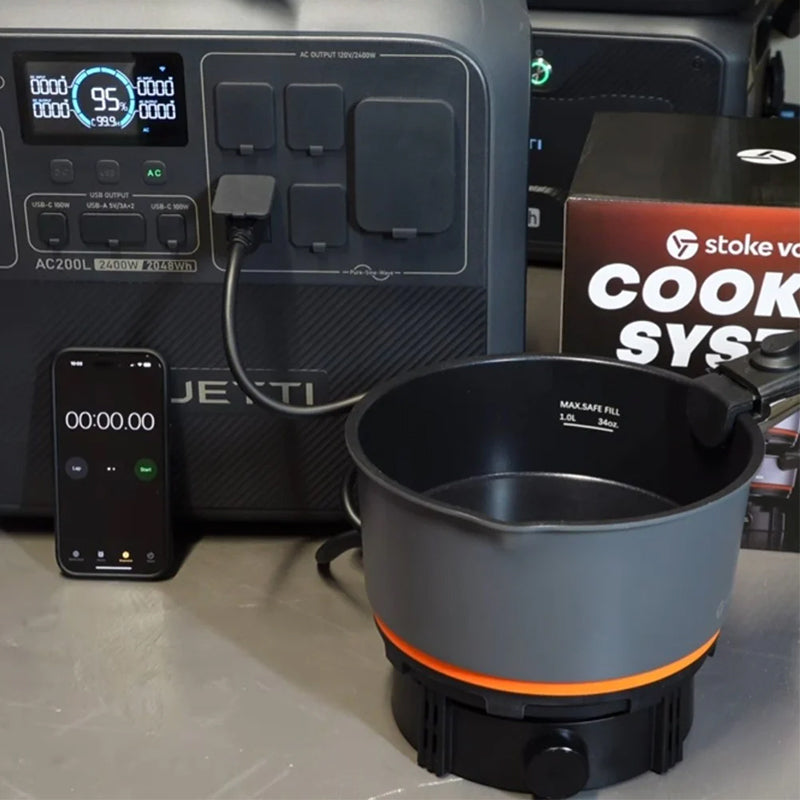
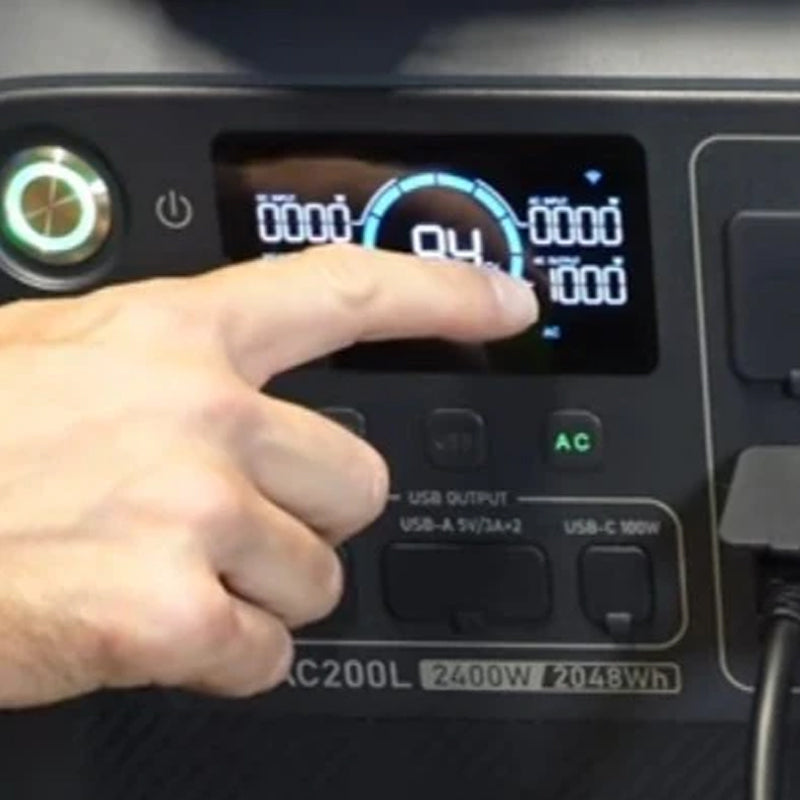
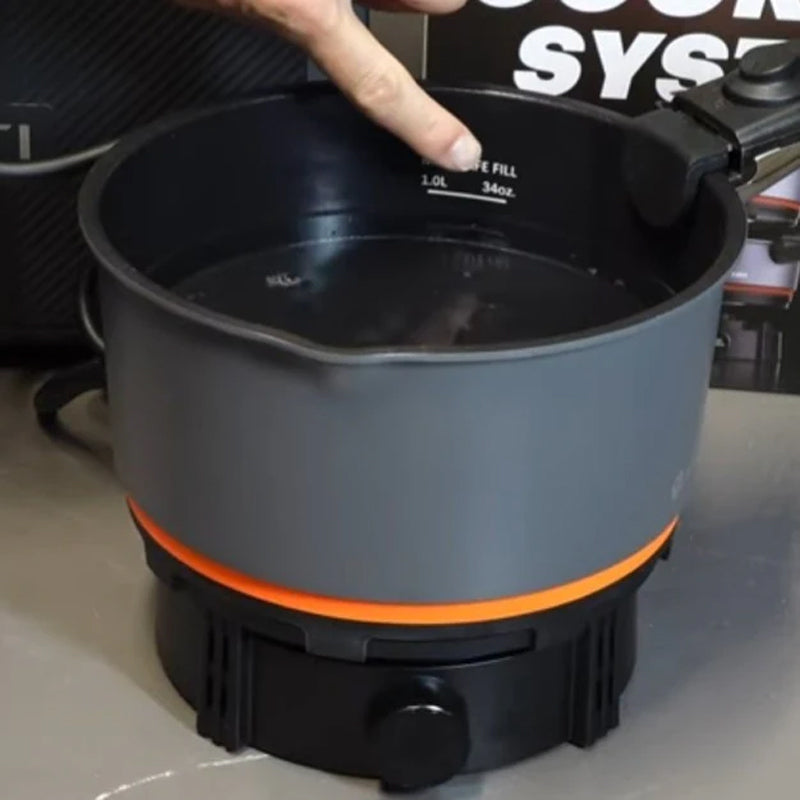
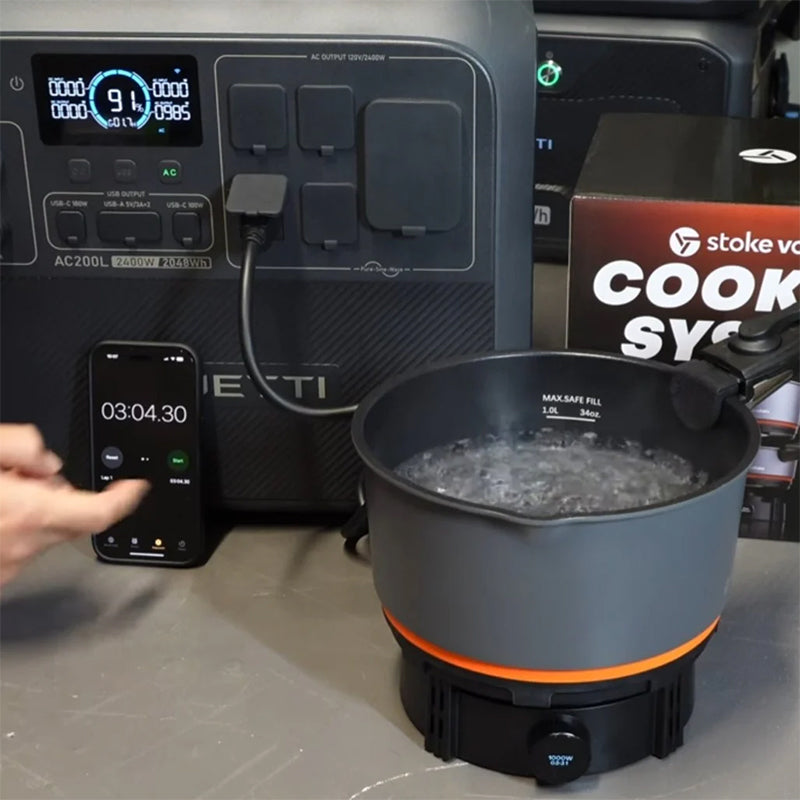
Now, we don’t have the exact watt-hour consumption in that test (many tests stop at “it worked fast”). But we can estimate. If you run at 1000W for 3 minutes (0.05 h), you’re using ~50Wh (watt-hours). If your power station is say 1000Wh capacity, that’s ~5% of the pack.
Given the smart auto-pause and shut-off features, the actual draw might be lower (because it can cut back once boiling is reached). So in practice you might see ~40-60 Wh for a litre boil in optimal conditions.
Let’s stretch the numbers and imagine you’re cooking more than just water. Here’s a rough guide:

Flexibility: With the wide range of power settings you don’t have to run full 1000 W all the time — you can simmer at 200-400 W to conserve juice.
Safety & environment: No open flame means fewer fire risk worries (especially in dry zones). The electric design is neat for minimal mess.
Compact-friendly: Ideal for car camping, rooftop tents, EV-based camping rigs, or backyard fire-ban zones.
Predictable energy use: Unlike gas stoves where you guess how much fuel you’ll need, here you see W/Wh, you can plan meals.
Pre-heat only what you need: Use the timer function and auto-pause so you’re not heating an empty pot longer than necessary.
Use lower wattage when possible: Simmering things at 200-400 W is totally fine for many dishes.
Match your battery size: If you’re running say a 500 Wh pack, aim for shorter, lower-power meals or recharge during the day (solar, alternator, etc).
Pack smart cookware: The non-stick/aluminium parts of the system conduct heat fast — so you don’t need longer time or higher power just to catch up.
If you’re looking to cook off-grid without messing around with propane or fuel bottles, the Nomad Cooking System gives you an elegant, electric option. From boiling water to simmering soup, the energy budget is reasonable — think in the tens to few hundreds of Wh per meal, not thousands. That means a single good portable power station can handle a full weekend of cooking.
It’s not just a gadget — it’s a strategy. Set up your energy, know your watt-hours, cook when you want, and stay freed up to enjoy the view.

Share:
Brew Bold with Your Electric French Press Coffee Kit