

If you have been following the Stoke News, your off-grid camp kitchen has undergone a massive technological evolution. You’ve ditched the fragile glass induction tops. You’ve thrown your rusty, 15-pound cast-iron skillet back into your home kitchen where it belongs . And you’ve cured your camp kitchen "Range Anxiety" by realizing you don't need a massive inverter to cook your dinner.
By making these strategic upgrades, you are about to experience a magical, secondary benefit that every true off-roader obsesses over: you are clawing back your vehicle's payload capacity.
The Overlander's Obsession: Gross Vehicle Weight Rating (GVWR)
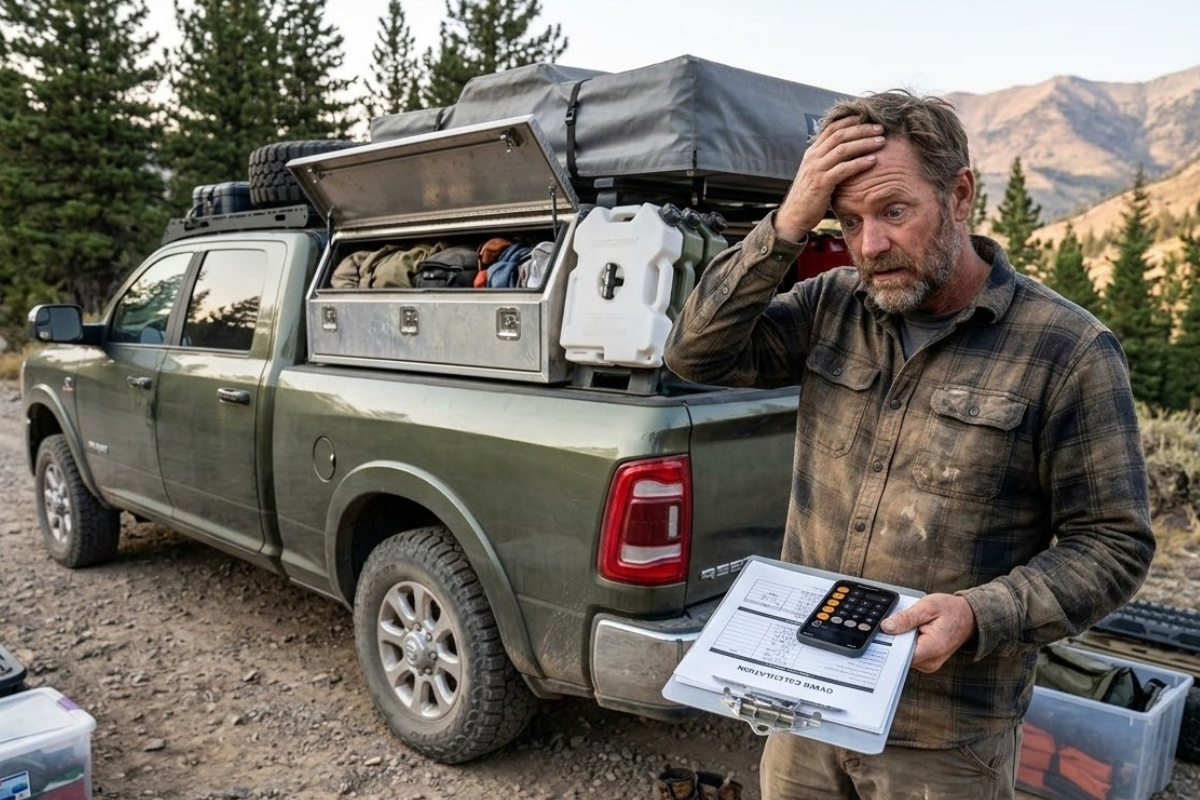
In the overlanding and car-camping community, weight is the ultimate, invisible enemy. Every single piece of gear you bolt onto your roof rack or toss into your trunk eats directly into your vehicle’s Gross Vehicle Weight Rating (GVWR).
As the off-road payload and suspension experts at Expedition Portal point out in their vehicle dynamics breakdowns, exceeding your payload capacity has catastrophic consequences for your rig. It destroys your gas mileage, accelerates the wear on your expensive suspension components, and creates a dangerously high center of gravity that makes your vehicle unstable on tight, off-camber mountain trails.
This inescapable physical reality is the number one reason traditional campers hesitate to switch to electric cooking.

The "weight penalty" of a traditional electric setup is massive. If you want to run a standard, dumb residential induction cooktop, you are forced to carry a massive, 50-pound portable power station just to handle the 1800W surge. Add in the bulky glass cooktop itself, plus the required 15 pounds of magnetic cast-iron cookware, and you can easily sacrifice 70 pounds of your precious payload just to be able to cook your morning eggs.
For a vehicle that is already loaded down with a rooftop tent, recovery gear, and a 12V fridge, that extra 70 pounds of kitchen gear is a dealbreaker.
Beating the Weight Penalty with Stepped Wattage
The secret to beating the electric weight penalty is precision power management. By utilizing the Nomad Cooking System, you don't just reduce the weight of your kitchen; you drastically reduce the weight of the battery required to run it.
Because the Nomad features intelligent, dynamic power control, it doesn't blindly surge your inverter. Instead, it allows you to manually select from five precise, stepped 200W-1000W power levels.This specific stepped adjustment changes the payload math entirely. Because you can confidently cook a full meal locked at a highly efficient 400W or 600W, you no longer need to haul a massive, 50-pound, $2,000 battery into the woods. You can power the Nomad flawlessly using a compact, lightweight 15-pound mid-tier power station. By simply utilizing smart wattage, you just saved 35 pounds of payload capacity. Your suspension is already thanking you.
The Modular Nesting Magic
But the weight savings are only half the battle; the other half is physical volume. A traditional pieced-together camp kitchen—with a separate burner plate, a tangle of thick power cables, and mismatched pots and pans that don't stack properly—is a chaotic mess that wastes precious square footage in your gear box.
The Nomad solves this through ultimate physical integration. It features a brilliant, purpose-built Modular Nesting Design.

The central Cooking Reactor, the 50 oz Bubbling Pot, the 45 oz Sizzling Pan, and even the detachable shared handle are all engineered to physically nest perfectly inside one another. The entire high-tech cooking ecosystem packs down like a futuristic Russian nesting doll into a single, compact, lightweight cylinder.
You completely eliminate the need for redundant, heavy materials. You get to keep your modern, flameless electric kitchen, claw back your payload capacity, and slide your entire culinary setup into the smallest corner of your trunk.
Share:
Demystifying Power Stations: Curing Camp Kitchen "Range Anxiety"
How to Keep Cooking When the Forest Service Cancels Your Campfire