

The transition to an electric camp kitchen sounds incredibly idyllic. You picture yourself waking up in a pristine forest, pressing a sleek button, and quietly brewing espresso while the birds sing. No open flames, no empty green propane canisters rattling around your trunk, and zero fossil fuel guilt.
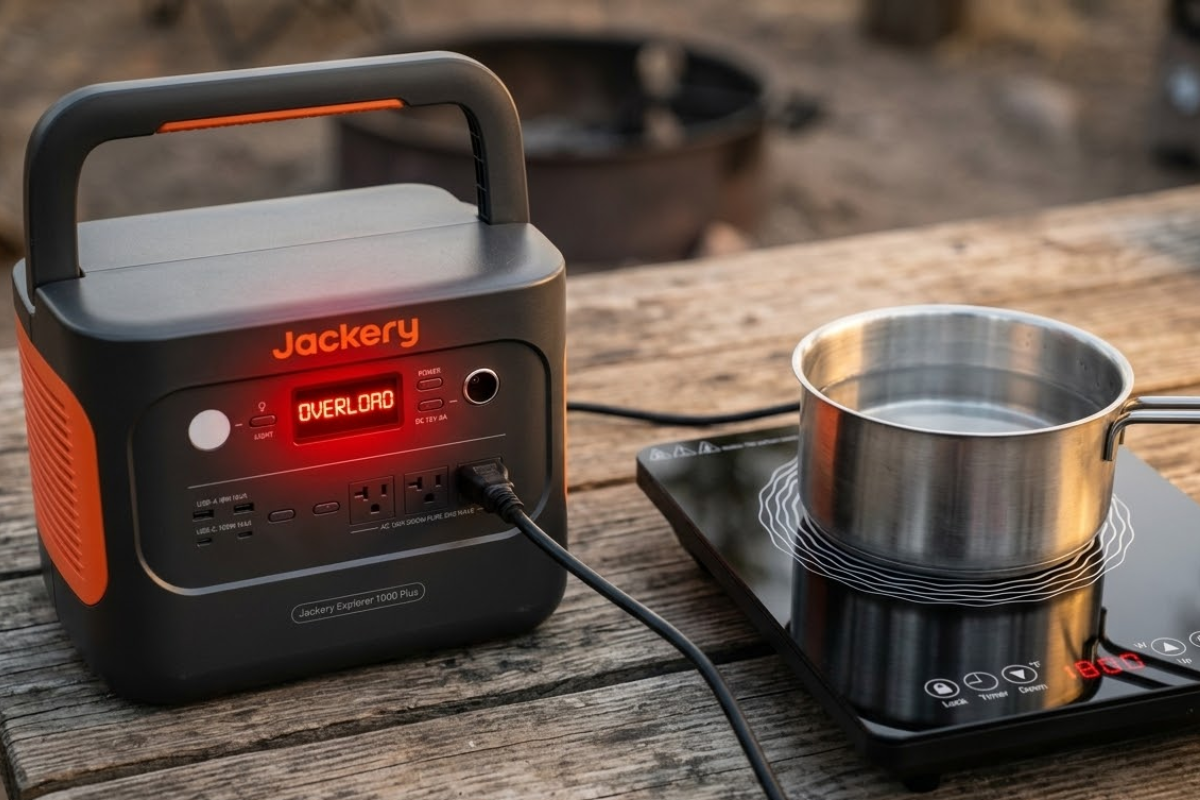
But then you actually try to plug a standard induction cooktop into a portable battery, and reality hits hard. The battery screams, an error code flashes, the power shuts off, and suddenly you’re eating dry cereal.
The relationship between off-grid heat sources and portable power stations is famously complicated, leading many campers to believe they need to spend thousands of dollars on a massive, heavy battery just to boil water. Fortunately, you don't. Here is how to demystify the power station puzzle and why smart, modular cookware is changing the game.
The "Massive Inverter" Myth and the Brute-Force Trap
If you drive an electric vehicle, you are already intimately familiar with range anxiety—that creeping fear that you won't have enough juice to make it to your destination. But when you transition to a fully electric camp kitchen, that anxiety shifts from your dashboard to your camp table.

Your portable power station is the absolute beating heart of your off-grid camp setup. It is the lifeline that keeps your 12V Dometic fridge running, charges your drone batteries, powers your string lights, and keeps your emergency radio functioning. If you kill the battery, your weekend is effectively over.
The problem is that traditional electric heating appliances are absolute, unapologetic energy hogs.
Many campers attempt to build their electric kitchens by purchasing standard residential induction plates. What they don't realize is that these appliances are "dumb." They were engineered to be plugged into a home wall outlet with an infinite supply of grid power. Because of this, they operate on a brute-force model. As the off-grid power experts at , a standard single-burner induction stove will instantaneously demand a massive 1500W to 1800W of continuous power the exact second you turn it on.
The Inverter Meltdown
When you plug an 1800W brute-force stove into a mid-tier portable power station (say, a 1000Wh battery), you are essentially asking a lawnmower engine to power a Mack truck.
The internal computer inside your power station that turns battery juice into usable wall-outlet juice is called an inverter. If your inverter isn't rated to handle a continuous 1800W draw, its safety circuits will immediately panic and trip to prevent a catastrophic meltdown.
To power a traditional "dumb" induction stove, the camping industry has essentially forced overlanders to buy massive, premium power stations. We are talking about $2,000, 50-pound behemoths that take up half of your truck bed. It completely defeats the purpose of lightweight camping.
And even if you do have a massive battery that can handle the 1800W surge, you still face the "All or Nothing" problem. Say you just want to gently simmer a pot of chili for an hour. A traditional induction plate doesn't actually lower its power draw; it just aggressively cycles that massive 1800W surge on and off. It is incredibly inefficient, wasting huge amounts of your precious battery capacity as ambient heat. You end up sitting in your camp chair, anxiously watching your battery percentage plummet from 80% down to 15%, terrified that your fridge will shut off at 3:00 AM and ruin your expensive steaks.
The Smart Solution: Adjustable Wattage
You shouldn't have to choose between eating a hot meal and keeping your beers cold. The cure for camp kitchen range anxiety is intelligent power management, and this is exactly where the Nomad Cooking System proves it was built specifically for the wild.
The Nomad completely bypasses the "massive inverter" requirement by utilizing dynamic, adjustable wattage technology. Instead of forcing a massive, uncontrollable power surge, the Nomad’s smart Cooking Reactor hands the electrical control back to you.
Through its intuitive digital interface, you can manually scale the power draw of the stove anywhere from a gentle 200W up to a searing 1000W.
This changes the overlanding math entirely. If you are running off a highly portable, budget-friendly 1000Wh mid-tier power station, you can simply dial the Nomad’s reactor down to an ultra-efficient 800W setting. It draws a smooth, steady, and entirely manageable current. Your inverter doesn't panic, the safety circuits don't trip, and the stove runs flawlessly.

Sure, it might take an extra 60 seconds to bring your pasta water to a rolling boil at 600W compared to a massive home stove. But in exchange for that single minute, you completely cure your range anxiety. Because the Nomad utilizes highly efficient direct-contact heating with its integrated Bubbling Pot and Sizzling Pan, it transfers that 600W directly into the food with near-zero energy waste.
You get to cook a Michelin-tier meal, confidently wipe the non-stick pan clean, and check your power station screen with a smile. You still have plenty of juice left to power your string lights, charge your camera gear, and keep your 12V fridge perfectly frosty until morning.
Aktie:
The Rust Struggle is Real: Why It’s Time to Ditch the Campfire Cast Iron
Payload Panic: How to Build an Electric Kitchen Without Weighing Down Your Rig